
Our exhaust systems perform several important functions in our vehicles, including quieting engine noise, monitoring combustion efficiency, and removing harmful pollutants from exhaust gases. After years of driving, you’ve probably developed an idea of what it should sound like when the exhaust is operating properly. When an issue arises in the system, such as a rattling or pinging noise, or an increase in engine noise, it’s generally hard to miss.
Where’s That Sound Coming From?
Though the exhaust system is a fairly simple one, various potential failure points could lead to a rattling noise while driving.
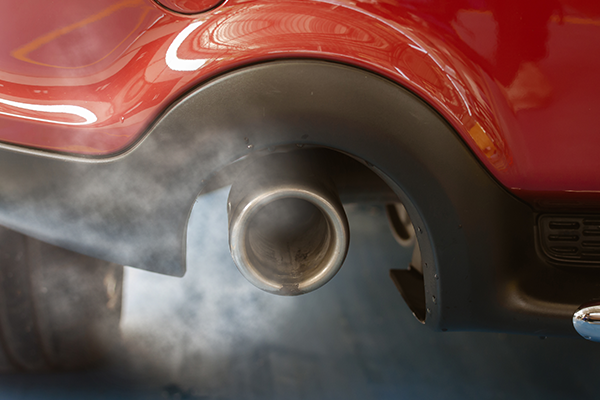
Exhaust Leak
The exhaust system relies on airtight seals and connections to ensure the fumes follow the correct path out of the vehicle and through the necessary noise-reducing and emission-reducing components.
Leaks can develop in your exhaust system for a few reasons, such as rust spots, collisions, or the failure of hardware or gaskets. The resulting sound varies considerably depending on the locations and size of the leak, but in some cases, it can resemble a ringing or rattling noise during acceleration.
If the leak occurs within or before the catalytic converter, it will also result in the release of harmful exhaust byproducts into the atmosphere and can prevent you from passing emissions testing in applicable areas.
Faulty Catalytic Converter
Catalytic converters are exhaust components that use a catalyst made of precious metals like platinum, palladium, or rhodium to react with exhaust pollutants and remove harmful compounds before being released into the atmosphere from your tailpipe.
The catalyst is arranged in a honeycomb grid that allows for exhaust gases to pass through. Whether due to external damage, old age, or excessive backfire from the engine, pieces of the catalyst can become loose within the catalytic converter. This debris will be trapped within the component, rattling around like a marble in a tin can as it’s blown around.
Beyond the frustrating noise, a broken catalytic converter honeycomb can block the exhaust’s path and even prevent the vehicle from running properly. It’s important to have a broken catalytic converter replaced before it can cause more significant issues.
Loose Heat Shield
A simple but common cause for rattling noises is a loose heat shield covering an exhaust component. Heat shields protect our mufflers, resonators, and catalytic converter from road debris while preventing the high-temperature surfaces from being exposed to any flammable material surrounding them.
The hardware holding this thin metal shield can rust away or become loosened over time, allowing the heat shield to vibrate against the hardware or other components. A loose heat shield isn’t necessarily a pressing issue, but if the shield becomes fully detached, it may lead to a fire hazard.
Broken Exhaust Hanger
The hangers in your exhaust system are what connect the system to the bottom of your vehicle, holding it in place and absorbing vibrations. When one of these hangers loosens or breaks, your exhaust components shift and vibrate, causing a rattling noise that may worsen at certain RPM ranges.
Fortunately, hangers are generally inexpensive and simple to replace. You should have your broken hanger replaced before the vibrations cause further issues in your exhaust system.
Exhaust Services in Des Moines, WA
Exhaust issues can be some of the most serious and must be addressed right away, and choosing the right auto repair shop to fix your vehicle’s exhaust system can be hard. Luckily, Quality Auto & Electric in Des Moines has got you covered. Our ASE-certified team is equipped with the knowledge and expertise to diagnose and fix exhaust problems, and every repair comes with a 24-month/24,000-mile warranty. Call us or schedule an appointment online with our friendly team today!